
I Stopped Trusting Focus Groups. Here's What We Built Instead.
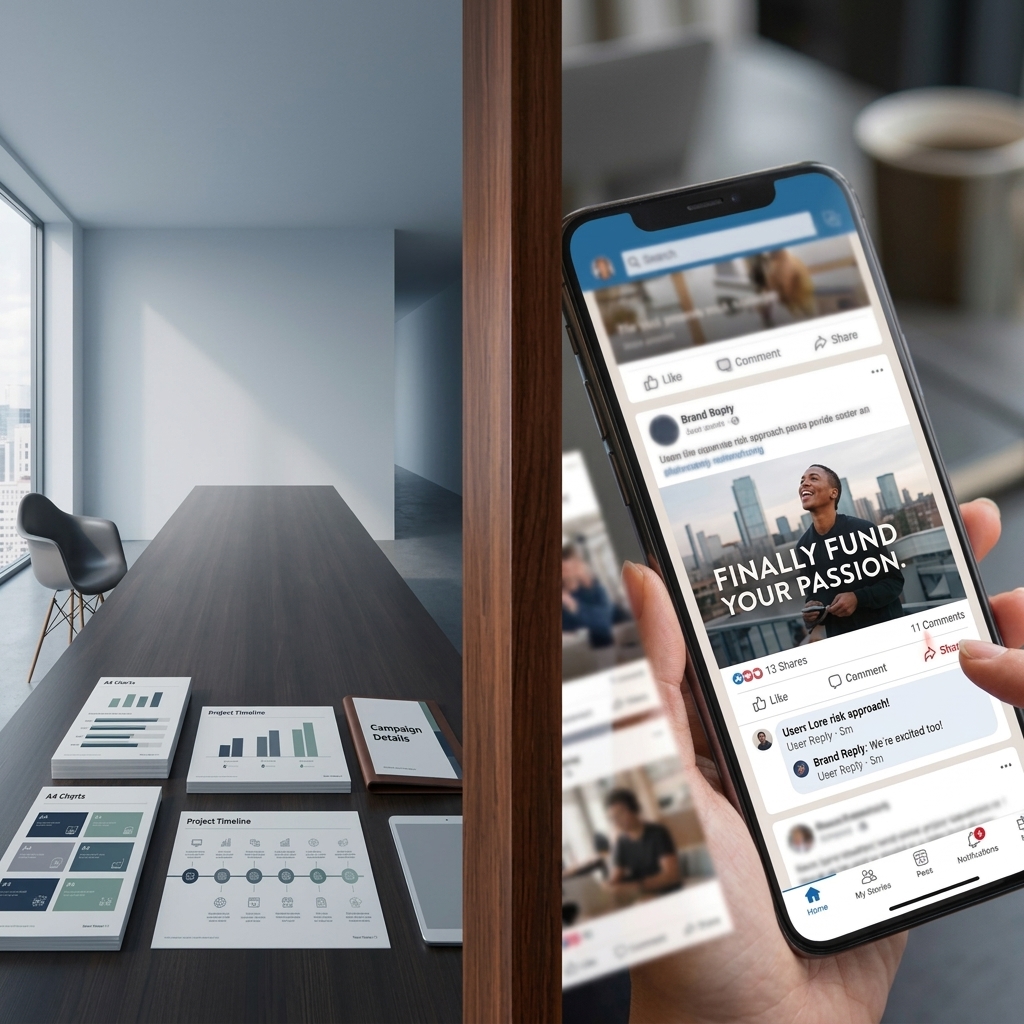
A few years ago, I sat at a giant conference room table with the AC blasting so cold I thought I’d get an ice cream headache, and watched a media buyer click through the results deck. By every number in the plan, the campaign had “worked”. Reach: hit. Purchased PR: hit. Frequency: hit. CPMs: on target. And still, everyone in that room knew what nobody wanted to say out loud: it was flat.
Almost any campaign "works" if you put enough money behind it. Spend enough, and you will hit your numbers — that's just math. The harder, more honest question is whether the message actually connected. Whether it moved someone enough to act, to remember it, to send it to a friend without being asked to. This one hadn't. Nobody was sharing it. Nobody was talking about it. It had been bought into existence, impression by impression, and the moment the budget stopped, so would it. In a market where attention is the one truly scarce resource, a message with no life of its own — no virality, no pull — isn't really landing. It's just rented space.
I’ve seen it so many times. A brand does everything "right": run the survey, hold the focus group, get the concept board in front of a dozen people in a conference room. Everyone would nod. And then the campaign would launch into the actual market, where people don't have twenty minutes to sit and evaluate a message. They have half a second to decide whether to keep scrolling, let alone pass it along.
That gap between what people say in a research setting and what they actually do — and share — in real life is where a lot of campaign budgets quietly go to die.
The problem isn't that research is wrong. It's that it's incomplete.
Traditional market research — surveys, focus groups, concept testing — isn't broken. It's just answering a different question than the one that actually matters before a launch.
It tells you what people think they'd respond to, not what they'd actually stop for. It's collected in an artificial setting — a room, a link, an incentivized panel — with none of the competing noise a real message has to fight through: other ads, other content, a feed full of things actively trying to hold someone's attention. And by the time the results come back, weeks or months later, the market has often already moved.
We didn't want to throw research out. We wanted to close the gap between what people say and what people do. So we built a way to test messages in the one place that actually mirrors reality: live, in people's real social feeds, competing against everything else fighting for their attention.
It’s called Behavioral Intelligence Testing, or BIT.
What Behavioral Intelligence Testing is
At a high level, BIT takes your messages and creative and runs them as real, live social ads to segments of your target audience. Not a script. Not a concept board. The real thing, in the real feed, next to real competition.
Then we measure what people actually do: do they stop scrolling? Click? Comment? Share? Ignore it entirely? That behavioral data — not stated opinions — tells you which message and which creative genuinely resonates, and which one just sounds good in a meeting. A comment or a share is a small thing, but it's also the earliest signal a message has any pull of its own — the difference between a message people passively receive and one they pass along.
It plays out in two stages. First, we test for interest: which messages actually make people stop and look, tested against thousands of real people in-feed. The messages that win advance to a second round that tests for engagement and action, which ones drive real clicks, comments, and shares, not just a passing glance. What comes out the other end is a clear, evidence-backed answer to the question every comms and marketing team is really asking before a launch: which message is actually going to work?
Why this matters more than you might think
I've been in enough leadership reviews to know the real question isn't "did the campaign run." It's "can you prove it worked, and did you know it would before we spent the budget?" Comms and marketing teams are under constant pressure to show real business impact, not just impressions, and most are still walking into those conversations with opinions and vanity metrics instead of evidence.
BIT changes that conversation. Instead of debating internally for weeks about which message "feels right," the audience settles it with real behavior. It also does something traditional research structurally can't: it tests finished creative — video, images, full ad units — not just scripts and copy decks, because the way people react to a 15-second video is nothing like how they react to a printed board in a conference room.
Proof, not just theory
In our experience, Behavioral Intelligence Testing will maximize the reach and virality of your campaign every single time. One of our recent clients was able to reach 70% more people with the same budget, because we helped them find the message that moved their audience.
What would you do if you could save 70% of your budget and still hit your goals? That idea for a new project that’s been sitting in the top drawer of your desk could finally get funded.
That's the difference between guessing well and knowing.
Where this leaves you
If you're heading into a launch, a rebrand, or a big campaign spend and the message was chosen by committee, brand instinct, or a survey that measured what people said they'd do — there's a real chance you're about to find out the hard way whether it actually works. BIT is built to answer that question before the budget's spent, not after.
If that's a conversation worth having, reach out to our team. We'd be glad to walk you through how a Behavioral Intelligence Testing program would work for your next campaign.
.svg)